Stump Removal in London

We provide stump removal in London for gardens, front plots and hard-to-reach outdoor spaces where an old tree base is left behind after felling or storm damage. Our service is centred on removing the remaining stump and the root flare that sits above ground, so the area can be reused more cleanly for replanting, landscaping or safer everyday access. If you need a practical solution for an awkward stump, we can help you move from a blocked corner to a usable space.
The work is usually carried out with mechanical stump grinding, chosen because it is efficient for many domestic and light commercial settings and keeps disruption focused on the stump itself rather than the surrounding garden. In straightforward terms, we reduce the visible stump below ground level to leave the site ready for your next plan. Where a site is constrained by paving, fencing or planting, careful access and controlled depth matter just as much as the machine used.
For a clear quotation, it helps to know the stump’s approximate diameter, how easy it is to reach, and whether the area has paving, steps, raised beds or utilities nearby. Tell us what needs removing, and we can discuss the most suitable approach. If you are comparing options, our wider stump grinding service page explains the core method in more detail, while this homepage keeps the focus on the result you want: the stump gone and the ground made usable again.
Removing stumps without disturbing the rest of the garden
Every stump presents a slightly different mix of size, species and access. A compact stump in open soil is usually simpler than one sitting close to a wall, shed base or patio edge. Our approach is based on working around the obstruction carefully, cutting the timber down in controlled passes and leaving the surrounding surface as tidy as possible. That makes the service suitable for customers who want the stump dealt with without turning the whole garden into a worksite.
Depth is an important consideration because some customers want the stump lowered enough for turfing, planting or laying decorative bark, while others only need it reduced enough to prevent trips and mower damage. We can talk through the level of removal that suits your plans. For those comparing related services, the stump removal page is a useful starting point for understanding the broader service family, while stump removal in London is the main area page.
When a stump has multiple roots or sits in heavy ground, it can take longer to work through the material cleanly. That is one reason stump work is often quoted individually rather than by a fixed menu. We do not invent a one-size-fits-all promise because the shape of the site matters. If you want to plan ahead, photographs and a simple description of access points can help create a more accurate quotation, especially where the stump is close to hard landscaping.
What stump grinding involves

Stump grinding uses a cutting wheel to chip away the timber bit by bit until the stump is reduced below the surrounding surface. This method is especially useful where full excavation would be unnecessarily disruptive or where the surrounding garden should remain largely intact. The process is controlled, localised and well suited to most ordinary garden settings, provided the site can be accessed safely and the stump is suitable for grinding rather than full root removal.
For many customers, the main decision is not whether to remove the stump, but how far down to take it. Some want the whole visible stump gone, while others want enough clearance to re-level soil, returf or replant over the area. The practical aim is to leave a smooth, manageable finish. If you are looking at the wider garden work that often follows stump removal, our garden services page outlines the kind of outdoor maintenance and improvement work that can sit alongside this job.
There are also occasions where stump grinding is not the best first step. Timber that has already begun to decay, areas packed with buried services or awkward slopes may call for a slower, more cautious plan. We will usually assess such points before setting out the job. The right outcome is not just removal but doing so in a way that suits the surface you want to use afterwards, whether that is lawn, gravel or a new planting bed.
Choosing the right stump solution
Not all stumps call for the same level of intervention. A stump that has already been cut low may only need a modest grind, whereas a taller or wider stump may need repeated passes to bring it down to the desired level. Hardwood species can be tougher than softwood, and a stump with spreading surface roots may need extra care where the roots meet nearby paving. These are practical factors, not selling points, and they directly shape how the work should be priced and scheduled.
If your plan is to re-use the area quickly, it helps to say what will happen after the stump has been removed. Turfing, replanting and new edging all benefit from a finish that matches the next task. Some customers also ask about related garden preparation once a stump has been ground. In those cases, the broader garden clearance page may be helpful because it covers the kind of clearance work that can sit around a removal project without changing the main scope of stump work itself.
We keep recommendations practical rather than over-complicated. If a stump is in a tight side return or behind narrow gates, the key question is whether the equipment can be brought in safely. If the route is awkward, the best plan may be a staged approach. In any case, a clear description of the stump and its surroundings gives us the basis for a sensible quotation and a realistic idea of the finish.
How the area around the stump affects the work

The surrounding surface often matters as much as the stump itself. A stump in open lawn usually allows freer access than one set beside decorative paving or a planted border. Surfaces can influence the speed of the work, the way the machine is positioned and how carefully the finish needs to be managed. That is why stump removal is best treated as a site-specific job rather than a generic task with the same method for every garden.
Edges, fences, retaining walls and tree guards can limit the working angle, so the operator may need to approach from one side and work gradually across the stump. This reduces the chance of unnecessary disturbance and helps protect the immediate area. If the project is part of a broader garden improvement plan, our landscaping page covers the sort of wider outdoor changes that are often considered once the stump has been dealt with.
Preparation does not need to be elaborate, but it should be sensible. Keeping the immediate area clear of pots, ornaments and movable furniture helps the work proceed smoothly. If access is through a side gate or shared passage, that is useful to mention early. Practical detail saves time because it lets the quotation reflect the real conditions instead of an optimistic guess. A straightforward description is usually enough for the first step.
Preparing for a quotation
A good quotation starts with the right information. The stump’s approximate size, the number of stumps involved and the ease of access are the most useful details, followed by any notable obstacles such as walls, steps, narrow gates or overhead branches. If you have several stumps in one garden, it helps to list them clearly so the work can be priced as a grouped job rather than as separate guesses. That keeps the conversation practical from the beginning.
It is also worth saying what finish you want after the stump has been ground. Some customers only want the visible timber removed, while others want the area level enough for new turf or planting. If there are follow-on jobs, such as clearing away loose material or tidying nearby beds, those can usually be discussed alongside the stump work. For customers comparing typical garden maintenance options, our garden maintenance page may help show how smaller outdoor tasks fit together over time.
One clear note and a few photos are often enough to begin a sensible discussion, especially if the stump is easy to identify and the space around it is straightforward. If you are unsure about anything, just describe the site as honestly as you can. The aim is to reduce uncertainty, not to overcomplicate the request. A concise enquiry usually leads to a more useful quotation than a long list of assumptions.
Common stump removal scenarios
Many stump jobs arise after a tree has already been cut down, leaving the remaining base to obstruct a lawn, border or access path. Others follow storm damage or long-term decay, where the stump has become unstable or untidy. Some are small ornamental tree stumps close to a planting bed, while others are larger roots from mature trees that once dominated a garden. Each case benefits from a service that is targeted to the stump rather than the entire site.
- single stumps left after tree felling
- multiple stumps in the same garden
- stumps close to paving or patios
- stumps blocking replanting or turfing plans
- stumps in narrow side access or enclosed yards
Where stumps sit beside hard surfaces, the finish usually needs more care to avoid unnecessary scarring of the surrounding area. That is one reason clear access notes are useful before work begins. If the stump came from a larger tree that also needs attention, the wider tree cutting service page is relevant, because it shows how felling or reduction work can link with stump clearance without turning every enquiry into a full tree surgery project.
About London
London is a city shaped by layers of history, water, transport and constant rebuilding. The River Thames remains the central natural feature, curving through the capital and linking a wide range of districts whose identities have developed over centuries. Roman foundations, medieval streets, Georgian squares and Victorian infrastructure all sit alongside modern towers and redeveloped waterfronts, which is why the city often feels like several places in one. The historic core around the City of London has long been a financial centre, while Westminster became associated with government, royal ceremony and national institutions. Beyond the centre, former villages and estates have been absorbed into the metropolis, leaving a patchwork of high streets, conservation areas and residential neighbourhoods with distinct characters. Green spaces are woven throughout the city as well, from the large Royal Parks to smaller commons and local gardens, while canals, rail corridors and former industrial land have been reshaped into parks, paths and mixed-use districts. Cultural life is equally varied: galleries, theatres, music venues and museums are distributed across the capital, and many areas retain strong local markets, parades and community events. The result is a city that combines global scale with close-grained local detail, where architectural landmarks and everyday streetscapes often sit only a short walk apart.
Other garden and outdoor services
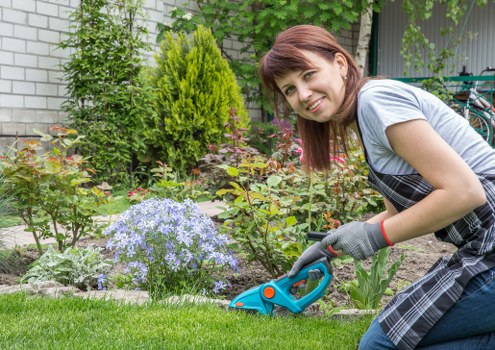
While stump removal is the main service here, many customers also need other outdoor work once the stump has been dealt with. That may include basic tidying, surface preparation or related garden improvements that make the cleared area useful again. We keep the focus on practical work that supports the site rather than adding unrelated extras. If you are planning a wider refresh, it can be sensible to discuss the sequence of jobs so the stump is cleared before any new surface or planting is started.
Related services can help when the garden needs more than one kind of attention. For example, trimming back growth, cutting grass or washing down paved areas may be part of the same broader improvement plan. Our grass cutting page is useful if the lawn also needs a neat finish after the stump work, and patio cleaning may be relevant where surrounding hard landscaping has collected dirt over time. These pages sit naturally beside stump removal without changing the main job.
If your outdoor area is being redesigned, some customers also look at the practical side of replacement and layout. That may mean deciding where new lawn will go, how borders will be shaped or how access across the garden should work once the old stump is gone. The key is to make sure the stump clearance fits the next stage rather than standing apart from it. Good planning now can prevent awkward edges later.
Why stump removal is often the first step
Stumps can stand in the way of almost every other garden improvement. They interfere with mowing, stop new turf from bedding in properly and make it harder to define a clear line for beds or paving. In many cases, the removal of the stump is the point at which a difficult patch of ground becomes ready for something more useful. That is why the job often forms the first step in a larger outdoor project rather than the final one.
Where there is a plan to change the shape of the space, it can be helpful to think ahead about what will happen after the stump is taken out. Will the area be left to settle, topped up with soil or planted straight away? These decisions affect the desired depth and finish. If the stump is part of an area that needs broader redesign, the garden decking service page may be useful for customers considering a new surface in place of part of the garden.
We also understand that some projects are just about removing a nuisance and nothing more. In those cases, the aim is simple: deal with the stump cleanly, leave the garden usable and avoid unnecessary disruption. Not every job needs a grand plan; sometimes what matters most is getting the obstacle out of the way and restoring easy movement across the space.
Getting the work organised

Once the key details are known, organising the work is usually straightforward. The useful points are the stump location, access route, approximate size and whether you want a full visible reduction or a deeper finish suitable for replanting. If there is more than one stump, a simple list helps keep the scope clear. That is often enough for us to prepare a quotation that reflects the real job instead of a rough estimate based on guesswork.
For many customers, the best results come from keeping the request clear and specific. Say what is there, what you want to achieve and whether there are any obstacles nearby. If the stump is part of a broader tidy-up or a larger outdoor project, mention that as well so the work can be considered in context. You do not need to over-explain; a concise description is usually more useful than a long story.
Request a quotation today for stump removal in London and tell us what needs clearing. If you are ready to move on, get in touch and we will help shape the work around your site and your plans.